Assisted Hatching
During IVF, the fertilized eggs are monitored for 3 to 6 days as they divide and develop into embryos. The best embryo can then be selected and placed into the uterus (embryo transfer) in the hopes of establishing a pregnancy or the embryos can be frozen for future use. The egg is surrounded by a protective shell (zona pellucida) which protects the egg and the resulting embryo during development. The embryo naturally breaks out of this shell as it grows.
Occasionally, the doctor may ask the IVF laboratory to make a small “crack” or “hole” in the outer shell of the embryo right before it is placed into the uterus (this is called assisted hatching). The hope is that assisted hatching might help the embryo to “hatch out” from During assisted hatching, the outer shell of the embryo is artificially weakened by making a small hole in the zona pellucida under the microscope.
Assisted hatching is a complementary technique that can be done to embryos in culture during an in vitro fertilization (IVF) treatment.
It consists of making a small hole in the zona pellucida of the embryo in order to facilitate the exit of the expanded blastocyst, a phenomenon known as hatching, and thus improve implantation rates. This procedure can be carried out mechanically, chemically and with the use of a laser.
How does the assisted hatching procedure work?
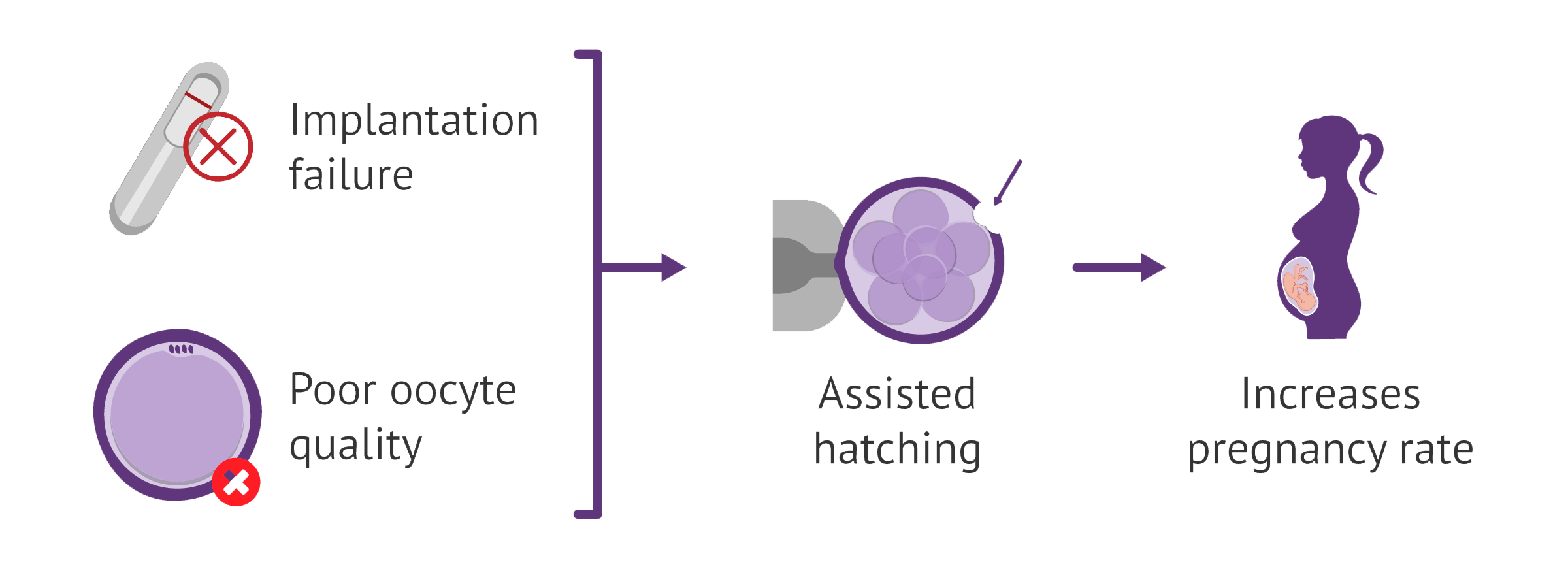
Assisted hatching is generally performed on the third or fourth day of embryo development. The embryologists use a laser to create a microscopic hole in the zona pellucida. Assisted hatching can also be done on previously frozen and thawed embryos.
Who are ideal candidates for assisted hatching?
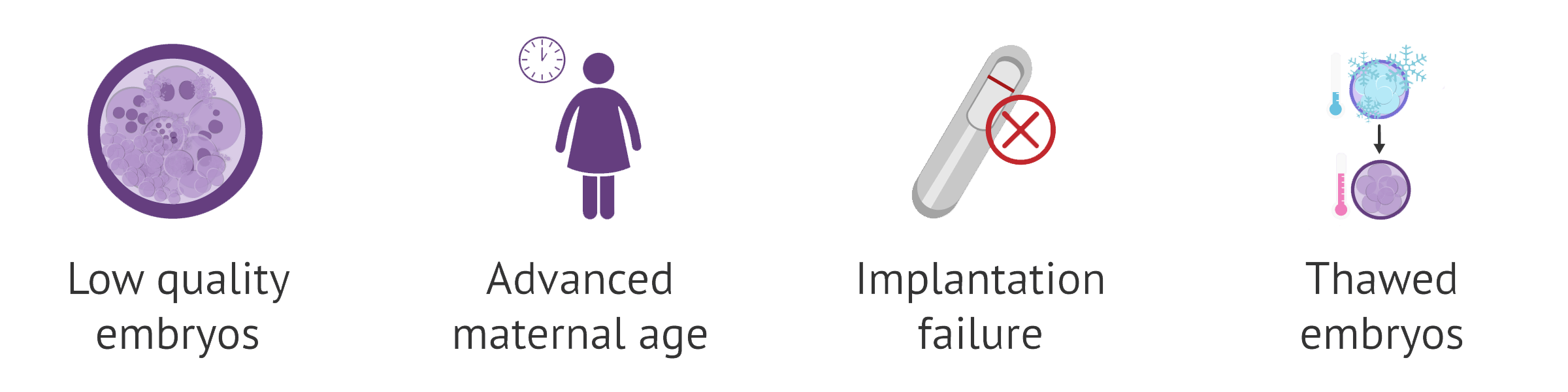
It is usually recommended for patients who have obtained poor quality embryos in previous treatments, in elderly patients (whose oocytes have a thicker or more hardened membrane) and in implantation failures. It is of great help to use it in the transfer of embryos that have already been cryopreserved.